A swim bag has one job a normal backpack can't do: carry soaked gear and dry clothes in the same bag without the dry things losing. That means a real wet/dry compartment, materials that shrug off puddled pool decks, and ventilation so your suit doesn't ferment between sessions.
There are two kinds of "swim bag," and most swimmers eventually own both: the mesh bag ($10–12) that holds your fins, paddles, and kickboard on deck, and the swim backpack ($55–80) that carries everything to and from the pool. Here are the best of each.
Swim Bags at a Glance
| Bag | Type | Price | Best for |
|---|---|---|---|
| TYR Alliance Backpack | Backpack | ~$80 | Best overall |
| Speedo Teamster 2.0 50L | Backpack | ~$75 | Biggest capacity / meets |
| Arena Spiky 3 | Backpack | ~$60 | Club swimmers |
| Speedo Teamster 35L | Backpack | ~$55 | Pool-to-work commuters |
| Speedo Mesh Bag | Mesh | ~$12 | Deck gear / drip-dry |
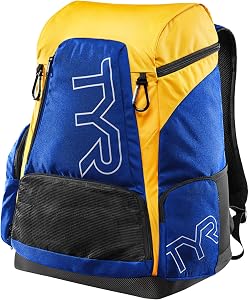
TYR Alliance Team Backpack
The bag you see on every collegiate pool deck in America, and it earns the ubiquity. Dedicated wet/dry pocket at the base, a fleece-lined top pocket for goggles (the detail that saves scratched lenses), side pockets that actually fit water bottles, and ballistic-grade fabric that outlasts multiple seasons of daily soaking. The organization is what sets it apart — everything has a place, so nothing marinates forgotten at the bottom.
Check Price on Amazon All swim bag picks
Speedo Teamster 2.0 50L
The meet-day and heavy-kit answer. Fifty liters swallows two towels, parka, fins, board, snacks, and a change of clothes with room left over, and the signature hard-molded top compartment protects goggles and electronics from everything below. If you swim competitively, travel to meets, or just refuse to pack light, this is the one. Too much bag for a casual lap swimmer.
Check Price on Amazon
Arena Spiky 3 Backpack
Europe's answer to the TYR Alliance and the style pick of the category — the Spiky's colorways are half the reason club swimmers buy it. Functionally it's excellent: ventilated wet compartment, quick-access top pocket, comfortable straps for the bike ride to the pool. Capacity (35–40L) sits between the Teamsters, right for a daily training load. Between this and the TYR it's genuinely preference.
Check Price on Amazon
Speedo Teamster 35L
The right size for swimmers whose pool session sits between home and work. 35 liters fits suit, towel, toiletries, and a laptop sleeve's worth of dry gear, in a shape that doesn't scream "gym bag" at the office. Same wet/dry separation as its bigger sibling. If your swimming is a lunchtime or before-work habit rather than a team commitment, start here and save $25.
Check Price on Amazon
Speedo Mesh Bag
Not a substitute for a backpack — a companion to one, and arguably the better first purchase. Everything that goes in the water (fins, paddles, kickboard, pull buoy, spare goggles) lives in the mesh bag, sits on deck during the session, and drip-dries on a hook afterward without ever mildewing. The drawstring doubles as a shoulder strap. Arena's version (~$10) is equally good; buy whichever matches your kit.
Check Price on AmazonHow to Choose a Swim Bag
Wet/dry separation is the whole point
Look for a dedicated waterproof-lined compartment — usually at the base or side — sized for a soaked suit and towel. Bags that offer only a flimsy internal pouch leave your dry clothes damp by the drive home. All four backpacks above do this properly.
Size to your swimming life
25–35L: lap swimmers and commuters. 35–40L: daily club training. 45L+: meets, doubles days, swim parents carrying for two. Oversizing sounds harmless but a half-empty 50L bag is a floppy nuisance on a bike.
Ventilation and materials
Mesh panels or drainage grommets in the wet zones prevent the chlorine-mildew smell that kills bags. Base fabric should be waterproof or at least heavily coated — pool decks are wet and locker room floors are worse.
Buy the TYR Alliance if you want the best all-round swim backpack, the Teamster 2.0 if you carry serious kit, and add the $12 Speedo mesh bag regardless — it's the highest value-per-dollar item in swimming.
Frequently Asked Questions
What makes a swim bag different from a regular backpack?
Wet/dry separation, drainage and ventilation, and water-resistant materials. A regular backpack keeps your wet suit sealed against your dry clothes and starts smelling of chlorine within a month.
Do I need a mesh bag and a backpack?
Most regular swimmers end up with both. The mesh bag holds in-water gear on deck and drip-dries it at home; the backpack handles transport and dry items. The mesh bag rides inside the backpack on the way in.
How do I stop my swim bag from smelling?
Empty it the moment you get home — wet compartments are for transport, not storage. Hang the bag open, rinse the wet pocket weekly, and dry mesh gear outside the bag.