The question of how to carry things on a run has one rule behind every answer: weight close to your centre of mass bounces least. A phone in a shorts pocket swings with every stride; the same phone in a snug belt at your waist barely moves. Here is how to apply that to a phone, keys and water.
Your Phone and Keys
For most runners, a waist belt is the answer. It carries the load at your hips, holds keys and a card as well as a phone, and leaves your arms free. An armband suits people who want to see and touch the screen during a run, but a large modern phone on one arm feels heavy after a while.

Fitgriff Running Belt
A zipped pouch on a sized elastic belt. The sizing is why it stays put better than most cheap belts. Two compartments, a reflective strip, and a price that makes it an easy first buy.
Check Price on Amazon All belt and armband picks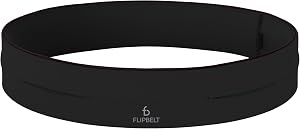
FlipBelt Classic
A wide tube of stretch fabric with slots all the way round. Items sit against your body across the whole band rather than hanging from a pouch, so it bounces less than anything else we cover - even with a large phone and gels. Size it carefully; it does not adjust.
Check Price on Amazon All belt and armband picksIf you carry a car or house key you cannot afford to lose, make sure it goes in a zipped pocket. Open slots and stretch pockets are secure for phones but a small key can work its way out over many miles.
Do You Need Water at All?
For runs under about an hour in mild weather, most healthy runners do not need to drink on the run if they start hydrated. Carry water on longer runs, in heat and humidity, and on trails without taps. Planning routes past fountains or shops is lighter than carrying anything.
Handheld, Belt or Vest
- Handheld bottle - simplest and cheapest, fine for up to about 90 minutes. A good strap means you do not have to grip it.
- Hydration belt - small bottles on your waist, hands free. Can bounce when full, so wear it low and snug.
- Vest - carries the most, bounces least, has space for a jacket and food. The standard for marathon training and trails.

Nathan SpeedDraw Plus Insulated Handheld
An insulated bottle on an adjustable hand strap with a zip pocket for your phone or keys. Keeps water cool on hot runs and is the simplest way to carry water for runs up to about 90 minutes.
Check Price on Amazon All hydration picks
Salomon ADV Hydra Vest 4
A close-fitting race vest with two soft flasks on the chest and stretch storage for gels, a phone and a light jacket. It barely moves at pace. More than a beginner needs; exactly what a marathon or trail runner wants.
Check Price on Amazon All hydration picksOne Carrier or Two?
Once you are carrying water, you rarely need a separate belt as well — handhelds and vests have pockets for a phone and keys. Most runners end up with a belt for everyday runs and a handheld or vest for long ones.
Carry your phone in a snug waist belt; choose an armband only if you want the screen in view. Skip water on runs under an hour in mild weather. For longer runs, a handheld works up to about 90 minutes, and a vest is the answer for marathon training and trails.
Frequently Asked Questions
What is the best way to carry a phone while running?
A snug waist belt worn low on the hips or at the small of the back. It keeps the phone close to your centre of mass, where it moves least, and has room for keys and a card. An armband is the alternative if you need to see the screen.
How long can I run without water?
Most healthy runners are fine without water for runs up to about an hour in mild conditions, if they start well hydrated. In heat, humidity or on longer runs, carry water or plan a route past fountains. Thirst is a reasonable guide for most people.
Do hydration belts bounce?
They can, especially with full bottles. Wear the belt low on the hips and snug, and choose one with bottles sitting close to the back. If bounce bothers you, a handheld or a vest moves less.
Is a running vest worth it?
If you run longer than about 90 minutes regularly, train for marathons or run trails, yes. Vests carry more water and kit than any alternative and move less once fitted. For shorter runs they are more than you need.