Most running clothing is black or dark grey, and for months of the year most people who run before or after work do so in the dark. From a driver's seat, a runner in black on an unlit road is close to invisible until very late. Fixing that is cheap. It just needs two different things, because being seen and seeing are separate problems.
Being Seen: Reflective Plus Light
Reflective material returns a car's headlight beam to the driver, which makes it very visible from in front and behind at night. It does nothing from the side, under street lighting, or to anyone without a light of their own. An active light fills those gaps. The safe combination is both.

Reflective Running Vest (2-Pack)
A pair of lightweight reflective strap vests for less than most single vests. They fit over a T-shirt or a winter jacket, weigh almost nothing and never need charging. The cheapest meaningful safety upgrade in running.
Check Price on Amazon All visibility picksPut Reflective Material Where It Moves
Research on pedestrian visibility has found that drivers recognise a person much sooner when reflective material is on the moving joints — ankles, knees, wrists — than when the same amount is on the torso, because the eye picks up the rhythm of running. A vest is good; a vest plus reflective shoe details or ankle bands is noticeably better.

Noxgear Tracer2 Light-Up Vest
A vest that lights up all the way round in a choice of colours, so you are visible from every angle including the side - and it is reflective and fluorescent too. It does not light the ground, so pair it with a headlamp on unlit roads. For busy roads before dawn, nothing else here makes you as obvious.
Check Price on Amazon All visibility picksSeeing: Headlamp or Chest Light
On lit streets you may not need a beam at all. On unlit roads and paths, you do — a kerb, pothole or tree root in the dark is how ankles get sprained. A headlamp points where you look and is best on trails. A chest light sits lower, so the beam is steadier and the ground's texture shows up better in its longer shadows, which many road runners prefer.
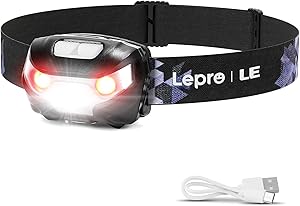
Lepro Rechargeable LED Headlamp
A light, rechargeable headlamp with a red mode. Bright enough for pavements and dark parks and light enough that it does not bounce much once the strap is snug. Not a trail lamp, but more than adequate for road running.
Check Price on Amazon All visibility picks
ISEYOU 500-Lumen Running Light Vest
A 500-lumen chest light on a reflective harness, so one purchase solves both problems. The beam barely moves as you run and tilts to light the ground a few strides ahead.
Check Price on Amazon All visibility picksRoad Habits That Matter as Much as Gear
- Run facing traffic where there is no pavement, so you can see what is coming and step aside.
- Use a red rear light on roads without pavements; many headlamps and vests have a red mode.
- Keep one ear free or the volume low. Hearing a car before it reaches you is part of being safe.
- Choose lit routes for dark runs where you can, and tell someone where you are going.
Wear something reflective, ideally with reflective details on your ankles or wrists, and add an active light so you are visible from the side and under street lights. On unlit roads and trails, carry a headlamp or chest light to see the ground. Run facing traffic where there is no pavement.
Frequently Asked Questions
What colour should I wear running at night?
Colour matters much less than reflective material and lights. Bright fluorescent colours help in daylight and dusk, but at night they look dark unless light hits them. Reflective material and an active light are what make you visible after dark.
Is a reflective vest enough for night running?
On its own, no. It is very visible to drivers whose headlights hit it, but invisible from the side and under street lighting. Pair it with an active light, and add reflective details on moving parts like ankles for the best visibility.
Should I use a headlamp for road running?
A headlamp works well on roads, and it is the best choice for trails. Many road runners prefer a chest light instead because the beam is steadier and does not move with the head. Either is fine - the important thing is having a light on unlit routes.
Is it safe to run in the dark?
It can be, with the right precautions: be visible with reflective gear and a light, see the ground with a headlamp or chest light, run facing traffic where there is no pavement, keep your hearing available, and prefer familiar, lit routes.