Nearly everyone runs with a phone now, and a phone in a shorts pocket is miserable: it swings, it bounces and it drags your waistband down with every stride. The fix is a carrier that holds it close to the body's centre of mass, which is why a snug waist belt is the answer for most people and an armband for the rest. The thing to judge is bounce. A belt that moves a few millimetres with each step becomes intolerable after 20 minutes, so fit and design matter far more than capacity. Below are six, from a $13 armband to the tube belts that most regular runners end up in.
Last updated: September 2026
| Belt | Tier | Style | Closure | Score |
|---|---|---|---|---|
| GUZACK Armband | Budget | Armband | Hook & loop | 7.5 |
| Fitgriff Belt | Budget | Pouch belt | Buckle | 8.1 |
| WATERFLY Belt | Best Value | Pouch belt | Buckle | 8.0 |
| SPIbelt Original | Best Value | Pouch belt | Buckle | 8.4 |
| FlipBelt Zipper | Premium | Tube belt | None (sized) | 8.6 |
| FlipBelt Classic | Premium | Tube belt | None (sized) | 8.8 |
Carry the Phone, Cheaply
An armband and a pouch belt that do the basic job well
The cheapest carrier here and the only armband, for runners who want to see and use the screen mid-run. The clear window works with the touchscreen, a small zipped pocket holds a key, and the strap adjusts to a wide range of arm sizes. The trade is the one every armband makes: a large phone on one arm feels heavy after a while, and sweat collects under it. For short runs with an app open, it does the job well.

A simple zipped pouch on an elastic belt, and the best value way to get a phone off your arm and out of your pocket. It is sized rather than one-size, which is why it stays put better than most cheap belts - measure your waist and use the chart. Two compartments separate the phone from keys, and the reflective strip along the zip is a nice touch for dark mornings. The belt most people should start with.
Built Not to Bounce
More room, better elastic and race-day features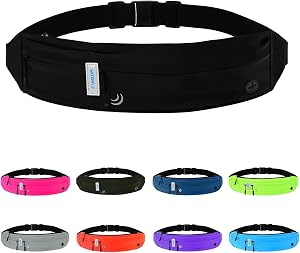
A wider, stretchier belt than the Fitgriff with three pockets instead of one, so the phone, keys, card and a gel each get their own space. The wider band distributes the weight better, which reduces bounce, and it adjusts across a generous waist range. It is bulkier than the minimalist options, so it suits people who carry more than a phone. A step up in comfort for regular runners.

The belt that made the category, and still a favourite for racing. The pocket starts small and expands to fit a phone, passport or gels, so when it is lightly loaded it all but disappears. The narrow band is less bulky than anything else here, but it relies on getting the tension right to avoid bounce. Clip-on bib toggles are sold for it. For runners who want the least belt possible.
The Tube Belts
Buckle-free, bounce-free, and what most regular runners end up using
The Classic with one of its openings replaced by a zipped pocket. That sounds minor and is the whole reason to pay more: a car key, a credit card or a hotel key card can go in the zip pocket with no chance of working its way out on a long run. Otherwise it is the same bounce-free tube. If you only ever carry a phone, save the money and buy the Classic.
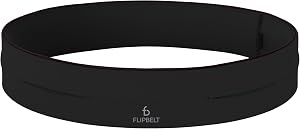
A wide tube of stretch fabric with slots around it: you drop items into the openings, flip the belt over so they face inward, and they are held against your body all the way round. Because the load is spread across the whole band rather than hung from a pouch, it bounces less than anything else here - even with a large phone and gels. It has to be sized correctly, as it does not adjust. The belt many regular runners end up with.
How to Choose a Running Belt
Belt or Armband?
A waist belt carries the load at your centre of mass, where it bounces least, and has room for keys, cards and gels as well as a phone. An armband keeps the screen visible and touchable, which suits people who follow a running app or change music a lot, but it puts weight on one arm and today's large phones make armbands feel heavy. For most runners, a belt is the better answer. Choose an armband if you want the screen in sight.
Bounce Is the Only Real Test
Every belt holds a phone when you are standing still. What separates them is whether it stays put at running pace. A belt should sit snug on the hips or low waist — tight enough not to move, loose enough to breathe — and the load should sit at the front or the small of the back. Wider, stretchier bands like the FlipBelt spread the pressure and bounce least. Narrow belts with a single pouch depend on getting the tension exactly right.
Tube Belts Need the Right Size
Buckle-free tube belts like the FlipBelt are sized, not adjustable, and a tube belt that is too big will bounce however you wear it. Measure where you will actually wear it — hips or waist — and follow the brand's size chart for that position. If you are between sizes, choose the smaller one, because the fabric relaxes a little with use.
Think About What Else You Carry
A phone is the obvious thing. The less obvious ones are a car key or house key you genuinely cannot lose, a card for emergencies, and gels on long runs. A zipped pocket is the only way to be sure about a key. If you are running long enough to need water too, a hydration belt or vest will carry everything at once.
Race Day Features
Some belts include bib toggles, so you can clip your race number to the belt instead of putting pins through your shirt. That makes it easy to move the number when you strip off a layer, and it is a small thing that is surprisingly welcome at the start line. The SPIbelt range and many hydration belts offer it; for most training runs it does not matter.
Frequently Asked Questions
What is the best way to carry a phone while running?
For most runners, a snug waist belt worn low on the hips or at the small of the back. It carries the phone close to your centre of mass, which is where it moves least, and it leaves room for keys and a card. An armband is the alternative if you want to see and touch the screen. Shorts pockets and hand-carrying are the least comfortable options on anything but very short runs.
Do running belts bounce?
A well-fitting one should not. Bounce usually comes from a belt that is too loose, too narrow or overloaded. Wide, stretchy tube belts spread the load and move least; narrow pouch belts work well when tightened properly. If a belt bounces, try wearing it lower on the hips and snugger, and move the heaviest item to the back.
Will my phone fit in a running belt?
Almost all modern phones fit in the belts on this page, including large models - check the listing's stated maximum size if your phone is unusually big or in a thick case. Armbands are more restrictive, and the phone's case can make the difference. The expandable SPIbelt pocket and the FlipBelt tubes are the most forgiving.
Is a running armband or belt better?
A belt is more comfortable for most people, carries more and bounces less. An armband wins only if you need the screen in view - for example to follow navigation or an interval app. With today's larger, heavier phones, many people who start with an armband move to a belt.
How should a FlipBelt fit?
Snugly, with no sagging when loaded. It is not adjustable, so the size is everything: measure around the point where you will wear it - lower on the hips needs a larger size than at the natural waist - and follow FlipBelt's size chart. If you are between sizes, go smaller.