Socks are the cheapest fix for the most common running complaint, which is blisters. Blisters come from friction plus moisture: a sock that holds sweat softens the skin, and a sock that slides or bunches rubs it. Cotton does both, which is why a pack of cotton sports socks is the single worst thing most new runners wear. A synthetic or merino running sock wicks sweat away, fits snugly enough not to move, and has no bulky seam across the toes. That is genuinely all you need to know. Below are six, from a six-pack that costs less than one pair of the premium socks, to a merino pair with a lifetime guarantee.
Last updated: September 2026
| Sock | Tier | Material | Pack | Score |
|---|---|---|---|---|
| CS Celersport | Budget | Synthetic | 6 pairs | 7.7 |
| Saucony RunDry | Budget | Synthetic | 6 pairs | 7.8 |
| Feetures Elite | Best Value | Synthetic | 1 pair | 8.5 |
| Balega Hidden Comfort | Best Value | Synthetic | 1 pair | 8.6 |
| Smartwool Run | Premium | Merino blend | 1 pair | 8.6 |
| Darn Tough Run | Premium | Merino blend | 1 pair | 8.9 |
Multi-Packs That Work
Synthetic, wicking and cheap enough to own a week's worth
The cushioned alternative to the Saucony at almost the same price. The padded sole takes the edge off hard pavements, and the ankle height with a raised heel tab protects the Achilles from the shoe collar. Heavier and a touch warmer than the Saucony, which makes it a better choice for cooler months and longer runs. A week's worth of perfectly competent running socks for the price of one premium pair.

The cheapest way to stop running in cotton, and one of the most-reviewed running socks on Amazon. Thin, light and ventilated with mesh panels, they dry fast and suit warm weather and shorter runs. There is not much cushioning and they are not built to last for years, but at this price per pair that hardly matters. If you currently run in cotton, buy these first and notice the difference immediately.
The Blister Fixers
Seamless toes, snug fits and proper cushioning
A sock shaped specifically for the left and right foot, with light compression through the arch that holds it snugly in place. The effect is a fit closer to a second skin than a sock, which is exactly what stops friction. This is the max-cushion version, so it is plush underfoot - excellent for long runs on hard surfaces, a little warm in summer. Runners who like a locked-in feel tend to become loyal to these.

Merino Grade
Wool that manages sweat and temperature, built to last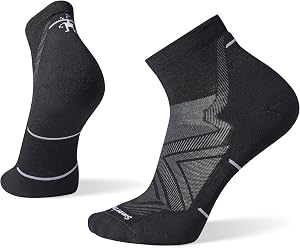
Merino with cushioning placed only where your foot lands - under the heel and ball - and thinner, ventilated knit elsewhere. It is warmer than the Darn Tough and the best choice here for cold-weather running, when merino's ability to stay warm when damp really shows. Less durable than the Darn Tough and without the guarantee. Buy it for winter, and for runners whose feet run cold.

The sock to buy if you are tired of buying socks. Darn Tough guarantees its socks for life, and the dense merino knit is the reason it can afford to: these genuinely take years of wear. It is thin, with light cushioning, so it suits runners who prefer ground feel, and the merino keeps feet comfortable across a wide range of temperatures. The most expensive pair you will buy once.
How to Choose Running Socks
Cotton Is the Problem, Not the Solution
Cotton absorbs sweat and holds it against your skin, and wet skin blisters far more easily than dry skin. It also loses its shape when damp, so the sock loosens and starts to slide inside the shoe — the second ingredient of a blister. Any sock sold for running will be a polyester, nylon or merino blend that moves moisture away from the skin instead. If you change nothing else about your kit, change this.
Cushion Is a Preference, Fit Is Not
Thin socks give more feel for the ground and leave more room in the shoe; thicker, cushioned socks add comfort under the ball of the foot and the heel. Neither is right. What matters is that the sock fits closely with no wrinkles, because a wrinkle is a friction point. One caution: if you switch from thin to thick socks, your shoes can suddenly feel a half-size smaller. Try new socks with the shoes you run in.
No-Show Socks Need a Heel Tab
Very low socks look tidy and are cooler in summer, but a no-show sock without a raised tab at the back lets the shoe's heel collar rub straight onto your Achilles. Every no-show pick on this page has a tab for that reason. If you get blisters on the back of the heel specifically, a tab or a quarter-length sock is usually the fix.
When Merino Earns Its Price
Merino wool manages moisture and temperature better than synthetics: it stays warm when damp, feels less clammy, and resists odour for longer. That makes it genuinely worth it for winter running, long runs and multi-day trips. For short summer runs a good synthetic sock is just as effective and cheaper. The Darn Tough also carries a lifetime guarantee, which changes the maths if you tend to wear through socks.
Blisters That Persist Are Usually the Shoe
If you have tried good socks and still blister in the same spot, the cause is almost always the shoe — wrong size, wrong width, or a seam in the wrong place. See the running shoe guide for fit checks. Lacing tweaks such as a heel-lock loop fix a lot of heel slippage for free.
Frequently Asked Questions
Do running socks really make a difference?
For blisters, yes - more than almost anything else you can buy. Running socks are made from materials that move sweat off the skin and are knitted to fit closely without bunching, which removes both causes of blisters: moisture and friction. Cotton sports socks do the opposite. The difference is noticeable from the first run.
Are thick or thin socks better for running?
Neither is objectively better. Thin socks give more ground feel and leave more room in the shoe; cushioned socks add comfort under the heel and forefoot. Pick by preference and by how your shoes fit - moving to a thicker sock can make a well-fitting shoe feel tight. What matters in either case is a close, wrinkle-free fit.
Is merino wool good for running socks?
Very good, especially in cold weather and on long runs. Merino stays warm when wet, feels drier against the skin, and resists odour far better than synthetics. It is more expensive and, in thin summer socks, the advantage over a good synthetic is smaller. Most merino running socks are blended with nylon for durability.
How do I stop getting blisters when running?
Start with non-cotton running socks that fit snugly, and make sure your shoes are the right length and width. If blisters persist in one spot, look at the shoe first - a heel-lock lacing loop fixes most heel slippage. Anti-chafe balm on known hotspots helps on long runs. Break up very long runs in new shoes rather than doing a half-marathon in them straight out of the box.
How many pairs of running socks do I need?
Enough to cover every run between laundry days, which for most people running three or four times a week is four to six pairs. That is why a budget multi-pack is a sensible start, with one or two premium pairs added later for long runs and cold weather.