Recovery tools are the area of running where the claims most outrun the evidence. Foam rolling does not "break up" anything, flush out lactic acid or prevent injury by itself. What it does reliably do is make tight, sore muscles feel better and move more freely for a while, which is reason enough for most runners — and it costs very little. The rules are simple: spend a minute or two on calves, quads, hamstrings, glutes and the hips, go gentler than you think, and never roll directly over a joint, bone or an acute injury. Below are six tools, three types, and one sensible order to buy them in.
Last updated: September 2026
| Tool | Tier | Type | Firmness | Score |
|---|---|---|---|---|
| Idson Stick | Budget | Roller stick | Adjustable by hand | 7.9 |
| Lacrosse Balls | Budget | Massage ball | Firm | 8.3 |
| Amazon Basics 18" | Best Value | Foam roller | High density | 8.0 |
| 321 STRONG | Best Value | Foam roller | Medium | 8.4 |
| TriggerPoint GRID X | Premium | Foam roller | Extra firm | 8.5 |
| TriggerPoint GRID | Premium | Foam roller | Firm | 9.0 |
Under Ten Dollars
A massage ball and a stick that cover most of what runners need
A handheld stick of rotating spindles that you press into the muscle yourself, which means you control the pressure precisely. It is the best tool here for calves and the front of the shin, which are awkward on a floor roller, and it is light enough to take to races and on trips. Less effective on the big muscles of the thigh and glutes, where a roller wins.

The single best-value recovery tool a runner can own. Stand on one and roll the sole of your foot, sit on one to work into the glutes, or lean against a wall to reach the hips and upper back. Solid rubber is firm, so go gently at first, and two let you work both sides of the spine. If you buy nothing else on this page, buy these.
The First Roller
Full-length rolling for quads, glutes and back
A plain, smooth, high-density foam roller at a price that makes it an easy first buy. The smooth surface is gentler than the textured rollers above it, which suits beginners, and 18 inches is long enough to roll both legs or the back. Solid foam will eventually soften and dent with heavy use, which is when the hollow-core rollers start to make sense.

A textured roller with three zones of different knobbliness, so you can choose gentler or more targeted pressure by moving along the roller rather than buying two. Medium density makes it forgiving for beginners. It is among the most-reviewed rollers on Amazon. A good step up from a smooth roller for anyone who wants more targeted work without going to extra-firm.
Rollers That Last
Hollow-core rollers that keep their shape for years
The GRID in an extra-firm version, for runners who have used a standard roller for a long time and find it too soft to do anything. Firmer is not better for most people - it makes you tense up, which defeats the point - so treat this as a specialist tool. For experienced athletes with heavily muscled legs, it is the roller that finally feels like it is reaching something.
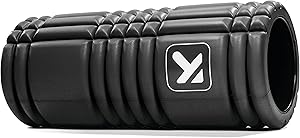
The roller physios and running shops recommend most often. A rigid hollow core wrapped in a patterned EVA surface means it holds its shape for years where solid foam rollers sag, and the mixed-density grid gives a feel closer to a massage than a smooth cylinder. It is firmer than the Amazon Basics and shorter, so it packs into a bag. The one to buy if you want to buy once.
How to Choose a Recovery Tool
What Rolling Actually Does
The best evidence suggests foam rolling gives a short-term increase in range of motion and a reduction in perceived soreness, likely through the nervous system rather than by changing the tissue itself. It does not prevent injury on its own, and it is not a substitute for easy days and sleep. Used as a few minutes of maintenance after runs, it is a cheap way to feel better — and that is a perfectly good reason to do it.
Roller, Stick or Ball?
A foam roller uses your body weight, so it suits big muscles — quads, hamstrings, glutes, upper back. A massage stick is held in your hands, which makes it better for calves and shins and easy to use sitting down or while travelling. A massage ball gets into small, deep spots a roller cannot reach — the glutes, the hip, and especially the sole of the foot, where many runners carry tension.
Softer Is Usually Better
Rolling should feel like firm pressure, not pain. If you are wincing, you are tensing, and a tense muscle does not relax. Beginners should start with a medium-density roller like the Amazon Basics or 321 STRONG. Extra-firm rollers like the GRID X are for people who find a standard roller too soft, not for getting better results faster.
The IT Band Myth
Many runners grind away at the outside of the thigh because they have been told to roll the IT band. The IT band is a thick sheet of connective tissue and does not meaningfully stretch or release under a roller. If the outside of your knee hurts, roll the muscles around it — glutes, hip and quads — and see a physio if it persists, because the usual fix is strength work, not rolling.
Where to Start
If you buy one thing, buy a massage ball: it costs almost nothing and reaches the foot and glute spots that matter most to runners. Add a stick if calves are your problem, or a roller if you want to work the big leg muscles. Hollow-core rollers like the GRID keep their shape for years; cheap solid foam rollers eventually soften and dent.
Frequently Asked Questions
Is foam rolling good for runners?
It is useful, within limits. Rolling reliably reduces perceived soreness and temporarily improves range of motion, which makes it a good post-run habit. It does not prevent injuries on its own or repair muscle damage. A few minutes on the major leg muscles after runs is plenty.
Should I foam roll before or after running?
Either works. Light rolling before a run can help you feel looser as part of a warm-up; longer rolling after a run or in the evening helps with soreness. Keep pre-run rolling brief and gentle - it is not a substitute for easing into the run itself.
How firm should a foam roller be?
Firm enough to feel pressure, soft enough that you can relax on it. Beginners should start medium. Extra-firm rollers are for experienced users who find standard density too soft. If rolling is painful enough that you tense up, the roller is too firm or you are pressing too hard.
Should I foam roll my IT band?
Rolling directly on the IT band is uncomfortable and does little, because it is dense connective tissue that does not release under a roller. Roll the muscles that attach to it - glutes, hip and quads - instead. Persistent pain on the outside of the knee is worth seeing a physiotherapist about.
What is a massage ball good for?
Small, deep areas a roller cannot reach - the glutes, the hip, the shoulders and especially the sole of the foot. Rolling a ball under the foot is one of the most popular self-care habits among runners with tight arches. Lacrosse balls are firm; start gently on sensitive areas.