Tennis balls go dead after 1–3 hours of hard play. Most recreational players get 2–3 sessions per can. Two things matter: ITF approval (quality guarantee you can count on) and felt type — Extra Duty for hard courts, Regular Duty for clay or carpet. Buy in 12–18 packs to cut the per-can cost by 30–40%.
Last updated: September 2026
| Ball | Tier | Felt | Surface | Score |
|---|---|---|---|---|
| Penn Championship | Budget | Extra Duty | Hard court | 7.5 |
| Wilson Championship | Budget | Woven Extra Duty | Hard court | 7.5 |
| Wilson US Open | Best Value | Extra Duty | Hard court | 9.0 |
| Penn Tour | Best Value | LongPlay | Hard / Clay | 8.5 |
| Babolat Roland Garros | Premium | All-court | All surfaces | 9.0 |
| Dunlop Australian Open | Premium | Extra Duty | Hard court | 9.0 |
Under $7 / can
ITF-approved for casual hitting sessions
The best-selling US tennis ball for decades. ITF approved with Extra Duty felt built for hard courts. Consistent bounce straight out of the can. Goes dead slightly faster than premium options — but for casual rallying and recreational play, it's exactly what you need.

Wilson's entry-level championship ball with woven Extra Duty felt — a small but noticeable durability edge over Penn. ITF approved with solid bounce and consistent performance for recreational hard court sessions. Available in bulk 12-packs for serious savings.
$7 – $10 / can
Tournament-grade quality at an everyday price
The official ball of the US Open — built to handle weeks of high-intensity play without losing pace. Premium materials, consistent bounce, and durability that outlasts budget options by a wide margin. The go-to recommendation for any player who wants serious performance without premium pricing.

Official ball of major professional tournaments. The LongPlay felt technology gives these a noticeably longer lifespan than standard balls — players report keeping them playable for 4–5 sessions instead of 2–3. Available in Extra Duty and Regular Duty; pick the right version for your surface.
$10 – $14 / can
Grand Slam–grade durability and consistency
The official ball of the French Open. Premium felt that holds its shape longer than anything in the budget or mid-range tier. Excellent consistent bounce and reliable flight across all court surfaces. Once you play a full match with these, going back to budget balls is genuinely noticeable.
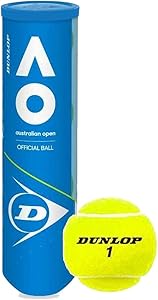
Official ball of the Australian Open. Dunlop's tournament-grade Extra Duty felt delivers a true, predictable bounce that holds up through extended hard court sessions. Superb consistency — every shot lands exactly where you expect. The choice for players who want match-play precision every session.
Tennis Ball Buying Guide
Felt type: match the ball to your surface
Extra Duty felt is thicker and woven looser to survive abrasive hard courts — it's the right choice for most players in the US. Regular Duty felt is thinner and tighter, designed for clay and indoor courts where fluffing is the enemy. Using Regular Duty on hard courts kills the ball in a session; using Extra Duty on clay picks up clay dust and gets heavy.
Pressurized vs pressureless
Everything on this page is pressurized — that's what gives a tennis ball its lively bounce, and why it fades after a few hours of play. Pressureless balls (solid rubber core) never go flat and are perfect for ball machines and practice baskets, but they feel stiff and heavy for match play.
Freshness matters more than brand
A fresh can of budget Penn Championships plays better than month-old premium balls. Cans slowly leak pressure even sealed (roughly 2-year shelf life), so buy from high-turnover sellers, and don't stockpile more than you'll use in a season or two.
The bulk-buying math
If you play weekly, you'll go through 15–25 cans a year. A 12-can case typically costs 30–40% less per can than singles. Do the math once and you'll never buy single cans again — this is the easiest money you'll save in tennis.
Frequently Asked Questions
What is the difference between Extra Duty and Regular Duty tennis balls?
Extra Duty balls have thicker, more durable felt for abrasive hard courts. Regular Duty balls have thinner, tighter felt for clay and indoor courts — on hard courts they fluff up and die fast. Match the ball to your surface: Extra Duty for hard courts, Regular Duty for clay.
How long do tennis balls last?
Pressurized balls stay lively for roughly 1–3 hours of hard play, or 2–3 recreational sessions. Even unopened cans slowly lose pressure after about 2 years. If the ball doesn't bounce back to about 55 inches when dropped from 100 inches, it's dead.
What are pressureless tennis balls and should I buy them?
Pressureless balls have a solid rubber core instead of pressurized air, so they never go flat — they're ideal for ball machines, teaching baskets, and practice. They feel heavier and stiffer than pressurized balls, so for match play stick with regular pressurized balls.
Does ITF approval matter for tennis balls?
Yes — ITF approval guarantees the ball meets standards for size, weight, bounce, and deformation. All balls on this page are tournament-grade. Unapproved bargain-bin balls often bounce inconsistently, which quietly hurts your timing.
What is the cheapest way to buy tennis balls?
Buy multi-packs. A 12-can case of Penn Championship typically drops the per-can price 30–40% versus buying singles. Unopened cans keep for around 2 years, so a case won't go to waste if you play regularly.