Pickleballs are not interchangeable, and using the wrong one is the fastest way to make a good paddle feel bad. Outdoor balls have 40 small holes, thicker walls and more mass, so wind moves them less and they fly faster and harder. Indoor balls have around 26 larger holes, thinner walls and a softer feel, so they travel slower and spin more. Buy for the surface you actually play on — outdoor balls indoors feel harsh and skid, and indoor balls outdoors get blown around and crack quickly in the cold.
Last updated: September 2026
| Ball | Tier | Use | Holes | Score |
|---|---|---|---|---|
| ONIX Fuse G2 | Budget | Outdoor | 40 | 8.2 |
| Franklin X-40 | Budget | Outdoor | 40 | 8.4 |
| ONIX Recruit Indoor | Best Value | Indoor | 26 | 8.3 |
| Dura Fast 40 | Best Value | Outdoor | 40 | 8.8 |
| GAMMA Photon | Premium | Indoor | 26 | 8.1 |
| Franklin X-26 | Premium | Indoor | 26 | 8.5 |
Everyday Balls
Buy these by the dozen and stop worrying about cracks
The ball to buy if you play outdoors through winter. The plastic formulation stays flexible at lower temperatures, so it resists the brittle cracking that ruins cheaper balls on cold mornings. Flight is slightly softer than the X-40 and it holds its shape well over a long session. A sensible default for anyone who plays outdoors year round.

The most widely played outdoor ball in the US, and the official ball of the US Open, so if you play tournaments this is probably what you will meet. The one-piece construction keeps the seam from being a weak point, and flight is genuinely consistent out of the pack. It is not the most durable ball in cold weather, but at this price you buy them by the dozen and stop caring.
Match Standard
What most leagues and tournaments actually put on court
A soft, quiet indoor ball that behaves predictably on a polished gym floor. The larger holes and thinner walls slow it down noticeably compared to any outdoor ball, which makes long dink rallies possible and takes the sting out of hard drives. Sold ready to play in multipacks. If your venue is a sports hall or church hall, this is the ball to bring.

The fastest-playing outdoor ball in common use, and the one most serious outdoor tournaments have historically run. It comes off the paddle quicker than the X-40 and rewards players who can handle pace, which is exactly why some rec groups dislike it. Durability is its weak point — it cracks sooner than the ONIX — but nothing else feels quite the same in a fast outdoor rally.
Best Flight
The most consistent bounce and truest flight you can buy
The softest-feeling ball here and the easiest on the hands and elbows, which matters if you play several indoor sessions a week. It comes off the paddle slowly enough that touch shots are very controllable, though players who like to drive hard will find it muted. High-visibility colouring makes it easy to track against a busy sports hall background.
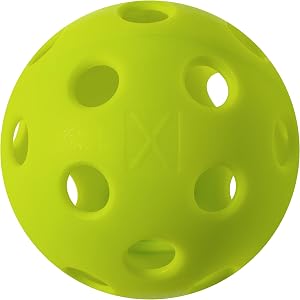
Franklin's indoor equivalent of the X-40, and the ball a lot of indoor leagues have standardised on. Flight consistency between balls in a pack is its real strength — you are not re-learning the bounce every time you open a new one. Slightly firmer than the ONIX Fuse Indoor, which suits players who find soft indoor balls too dead.
Choosing the Right Pickleball
Indoor and Outdoor Are Genuinely Different Balls
This is the single most common beginner mistake. Outdoor balls have 40 small holes and heavier, harder plastic so wind does not push them around. Indoor balls have about 26 larger holes and softer plastic so they stay controllable on a slick gym floor. Swap them and the game changes completely — an outdoor ball on a gym floor skids and stings, an indoor ball outside is unplayable in any breeze.
Cracking Is Normal, and Cold Makes It Worse
Every pickleball eventually cracks; that is the nature of moulded plastic being hit hard. Cold weather makes it dramatically worse, because the plastic gets brittle. If you play outdoors below about 10C, expect to go through balls faster and buy a ball specifically rated for cold. A cracked ball is not just softer, it flies unpredictably — bin it.
Check It Is USA Pickleball Approved
If you play in any organised league or tournament, the ball needs to be on the USA Pickleball approved list. Every ball here is. For back-garden play it does not matter, but approved balls also tend to be more consistent between batches, which is worth having even socially.
Buy More Than You Think
Balls are consumable. A three-pack lasts a serious outdoor player a few weeks at most. Buying a bulk pack is substantially cheaper per ball and means you are never tempted to keep playing with a cracked one, which is how bad habits and inconsistent contact creep in.
Frequently Asked Questions
What is the difference between indoor and outdoor pickleballs?
Outdoor balls have 40 small holes, thicker walls and more weight, so wind affects them less and they play fast and hard. Indoor balls have around 26 larger holes and softer, thinner plastic, so they are slower, quieter and easier to control on a gym floor. They are not interchangeable and playing with the wrong one changes the game noticeably.
How long does a pickleball last?
Outdoors, a ball might last a few sessions before it cracks or goes soft — sometimes a single cold morning. Indoors they last considerably longer because the surface and temperature are kinder. Once a ball cracks, or you can squeeze it noticeably out of round, replace it: the flight becomes unpredictable.
Why do pickleballs crack so easily?
They are single-piece moulded plastic being struck hard, repeatedly, often on abrasive outdoor courts. Cold makes the plastic brittle and accelerates it. Some outdoor balls are specifically formulated to stay flexible in low temperatures, which is worth paying for if you play through winter.
Can I use an outdoor ball indoors?
You can, but it plays badly. The heavier, harder outdoor ball skids on a smooth gym floor, comes off the paddle faster than you expect and stings on the hands. If the venue supplies balls, use theirs — most indoor venues have standardised on an indoor ball for good reason.
What colour pickleball should I buy?
Whatever contrasts most with your court surface and background. Yellow and neon green are the safest defaults outdoors; on a dark indoor floor a lighter ball is easier to track. Colour has no effect on flight, only on how well you see it.