An overgrip is the highest-value few pounds in pickleball. It fixes a slippery handle, lets you build up a grip that is too small, and can be replaced when it wears instead of replacing the paddle. The choice is simple: dry-feel grips (like Tourna) absorb sweat and get tackier as they get damp, while tacky grips feel grippier in the hand when dry but turn slick once you sweat. A paddle cover is the other cheap insurance — it stops a raw carbon face getting chipped against zips and shoes in your bag.
Last updated: September 2026
| Product | Tier | Type | Feel | Score |
|---|---|---|---|---|
| GAMMA Supreme | Budget | Overgrip | Tacky, cushioned | 8.3 |
| Tourna Grip Original | Budget | Overgrip | Dry, absorbent | 8.7 |
| Wilson Pro Overgrip | Best Value | Overgrip | Tacky, thin | 8.4 |
| HEAD Xtremesoft | Best Value | Overgrip | Soft, absorbent | 8.5 |
| ONIX Paddle Cover | Premium | Cover | Padded neoprene | 7.9 |
| Franklin Paddle Cover | Premium | Cover | Neoprene | 8.0 |
Grip Basics
The two grips most players end up choosing between
The opposite choice to the Tourna and the right one for dry hands. Noticeably tacky and more cushioned, which takes some sting out of hard contacts and feels immediately comfortable. The trade is that it loses grip once it gets damp, so it is a poor pick for humid outdoor sessions. Slightly thicker, so it builds up handle size a little faster.

The grip that most players with sweaty hands end up using, and the one you see on tour more than any other. It feels chalky and slightly rough when new, which puts some people off immediately, but it becomes grippier as it absorbs sweat rather than slicker. Thin, so it barely changes handle size. If your hand slips in humidity, start here.
Comfort Grips
Softer, more cushioned wraps for longer sessions
The thinnest grip here, which makes it the right choice if you like tackiness but do not want to increase your handle size. Popular with players who already find their grip on the large side or who want maximum feel through the handle. Same caveat as any tacky grip: it gets slippery once your hands are wet.

A middle path between the Tourna and the Gamma: softer and more comfortable than a dry grip, but with more moisture absorption than a purely tacky one. A good default if you do not have strongly sweaty or strongly dry hands and just want something comfortable that lasts a few weeks. Sold in multipacks, which is how overgrips should be bought.
Paddle Protection
Covers that keep a carbon face intact in a packed bag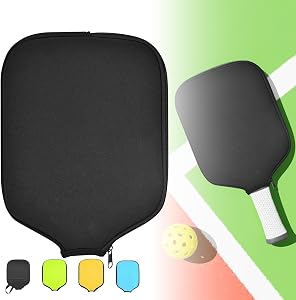
A slightly more padded cover with better protection around the edge guard, which is where most bag damage actually happens. Fits standard and most elongated shapes. Worth the small premium over the Franklin if you carry your paddle in a packed tour bag rather than a near-empty sling.

Basic, cheap and does the job. A neoprene sleeve that covers the face and edge guard so nothing in your bag can chip or scuff the paddle. There is nothing clever about it, but if you have just spent serious money on a carbon paddle and are throwing it in a bag with your shoes, this is the obvious insurance.
Grips, Sizing and Protection
Dry Feel or Tacky - Pick by Your Hands
This is the whole decision. Dry-feel grips such as Tourna feel slightly rough and chalky when new and become grippier as they absorb sweat, which makes them the standard choice for humid conditions and people whose hands sweat. Tacky grips feel wonderful for the first twenty minutes and then get slippery once damp. Neither is better; they suit different hands.
You Can Only Make a Grip Bigger
If a handle feels too small you can add one or two overgrips to build it up. If it feels too big there is very little you can do short of stripping the base grip, which is fiddly and often not worth it. When you are between grip sizes, always buy the smaller one — building up is easy and reversible.
Replace Grips Far More Often Than You Think
An overgrip is consumable. Playing three times a week, most people should replace it every three to four weeks. Long before it looks worn it stops absorbing sweat, and a slipping handle makes you squeeze harder, which is a direct route to tennis elbow. They are cheap — buy a multipack and change them on a schedule.
Covers Are Cheap Insurance on Expensive Paddles
Raw carbon faces are the most damage-prone part of a modern paddle, and the damage almost always happens in the bag rather than on court. A neoprene cover costs a fraction of a premium paddle and stops zips, shoe soles and keys chipping the edge and scuffing the grit off the face.
Frequently Asked Questions
What is the difference between a grip and an overgrip?
The grip is the base layer wrapped around the bare handle, fitted at the factory. An overgrip is a thin wrap that goes on top of it, adds a little thickness and takes all the sweat and wear. You replace overgrips regularly and the base grip almost never — that is the point of the system.
Which overgrip is best for sweaty hands?
A dry-feel grip such as Tourna Grip. It absorbs moisture and actually becomes tackier as it gets damp, which is the opposite of how a tacky grip behaves. If your hands sweat heavily or you play in humidity, this is the single most effective change you can make.
How often should I change my overgrip?
Every three to four weeks if you play three times a week, and sooner if you sweat heavily. The signal is not how it looks but how it feels: once it stops absorbing and the handle starts turning in your hand, it is done. A slipping grip makes you squeeze harder and that causes elbow pain.
How do I make my paddle grip bigger?
Add an overgrip — each one adds roughly 1/16 of an inch. Two overgrips take a 4.125 inch handle to about 4.25. You can also use a heat-shrink sleeve under the base grip for a larger jump. Going smaller is much harder, which is why you should buy the smaller grip size when in doubt.
Do I need a paddle cover?
If your paddle has a raw carbon face, yes. That surface texture is what generates spin and it wears off quickly when rubbed against zips, keys and shoe soles in a bag. On a painted budget paddle it matters much less. A cover costs very little relative to the paddle it protects.