Goggles are the first thing a beginner should buy and usually the last thing they think about. The reasoning is simple: rental goggles are the worst item in the whole rental shop. They have been worn by hundreds of people, the inside of the lens has been wiped by most of them, and a wiped lens has no anti-fog coating left.
So you end up on a mountain looking through a scratched, permanently fogging lens, in light you cannot read, wondering why skiing feels harder than it looked. A $30 pair of your own fixes it completely.
What Actually Matters on a First Pair
A mid-tint lens, not a dark one
The instinct is to buy the darkest, most mirrored lens because that is what looks like skiing. It is the wrong call for a first pair. Dark lenses are wonderful in spring sun and genuinely hazardous in the flat light that makes up most of a winter, where they erase the terrain entirely. A mid tint - somewhere in the 20 to 40 percent VLT range - works acceptably in both.
Face foam, which nobody checks
Cheap goggles use a single strip of foam; better ones use three layers. This sounds like a trivial spec and it is the main reason budget goggles fog: if the foam does not seal against the bridge of your nose, every breath you take rises straight onto the inside of the lens. Three-layer foam is the single feature worth paying an extra ten dollars for.
OTG, if you wear glasses
OTG means "over the glasses" - the frame is cut wider with notches for spectacle arms. Without it, the arms press into your temples until it genuinely aches, and your glasses lenses block the airflow that would otherwise keep things clear, so both surfaces fog. OTG goggles cost almost nothing extra and every beginner pick here is one.
The Picks

OutdoorMaster OTG Ski Goggles
The default answer and the most-reviewed goggle on the mountain. Three-layer face foam is the reason to pick it over anything cheaper - it seals at the nose rather than venting your breath onto the lens, which is the failure mode that ruins budget goggles. The lens is a mid tint so it works in cloud and is adequate in sun, and the OTG cut fits over glasses. Optics are ordinary; nothing about it fails.
Check Price on Amazon All goggle picks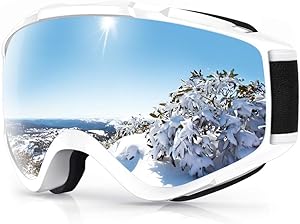
findway Ski Goggles OTG
The cheapest pair here that is not a toy, and the pick if you wear glasses and are watching the money - the OTG cut is genuinely wide rather than nominally wide, which is not true of every goggle claiming the label. Dual-pane anti-fog construction and a mid tint. The lens does not come off, and optical quality is a step behind the OutdoorMaster, but for a first week it does the job.
Check Price on Amazon All goggle picks
OutdoorMaster Ski Goggles PRO
The first pair here where the lens comes off, which is what makes it the better buy for anyone who expects to ski more than one trip. The frame takes more than twenty lens options cheaply, so a low-light lens for a grey week becomes a small add-on instead of a second pair of goggles. The swap uses clips rather than magnets - fiddly in gloves, perfectly fine indoors the night before.
Check Price on Amazon All goggle picksBuy your own goggles before your first day - rental pairs are scratched and permanently fogged, and they make skiing harder than it needs to be. Choose a mid-tint lens in the 20 to 40 percent VLT range rather than the darkest one, check for three-layer face foam, and buy OTG if you wear glasses. If you already know you will ski again, spend a little more on an interchangeable frame.
Two Things That Will Save Your Goggles
First: never wipe the inside of the lens, not even with the soft bag. The anti-fog coating comes off with one cold wet wipe and never comes back. Shake the water out and let them air dry instead.
Second: do not park them on your helmet on the lift. Warm air rises off your head, condenses on the cold lens, and you spend the next run looking through fog. Keep them on your face or around your neck. Between those two habits and a pair that fits your helmet without a gap, a set of goggles lasts many seasons.
Frequently Asked Questions
Should I buy ski goggles or use rental ones?
Buy your own, and buy them before anything else. Rental goggles have been worn by hundreds of people and most of them wiped the inside of the lens, which permanently removes the anti-fog coating. You end up looking through a scratched, fogging lens in light you cannot read. A pair of your own for around $30 fixes it completely and lasts seasons.
What lens tint should a beginner buy?
A mid tint, roughly 20 to 40 percent VLT. The instinct is to buy the darkest mirrored lens because that is what skiing looks like, but dark lenses erase terrain in the flat light that makes up most of a winter. A mid tint is acceptable in sun and still lets you read the snow when it clouds over, which is the right compromise for a single-lens goggle.
What does OTG mean on ski goggles?
Over The Glasses. The frame is cut wider with notches in the sides to make room for spectacle arms. Without it, a goggle presses the arms into your temples until it aches, and the extra lens sitting close to the goggle traps warm air so both surfaces fog. OTG frames cost very little extra, and if you wear glasses on the hill they are not optional.
How much should beginner ski goggles cost?
Around $27 to $40 buys a genuinely good first pair with dual-pane anti-fog construction, three-layer face foam and an OTG cut. Below about $20 the face foam is usually a single strip that does not seal at the nose, which is what makes cheap goggles fog. Spending past $40 mainly buys interchangeable lenses, which are worth it only if you expect to ski regularly.
Why do my ski goggles keep fogging up?
Usually one of three things. You wiped the inside of the lens at some point and removed the anti-fog coating. Your neck gaiter or mask is tucked under the goggle foam and funnelling warm breath up behind the lens. Or you rested the goggles on your helmet on the lift, where rising body heat condensed on the cold lens. All three are habits rather than product faults.