A ski helmet is the cheapest insurance in the sport and one of the few pieces of gear where the budget option is genuinely close to the expensive one. Every helmet sold in the US for snowsports has to meet ASTM F2040, and every pick on this page does, which means a $46 lid and a $75 lid have both passed the same impact test. What the extra money buys is fit, ventilation, weight, and on some models MIPS — a slip layer that reduces rotational force in an angled impact. What it does not buy is permission to skip the certification check. Below are six that fit well and are certified, plus the two fit tests worth doing before you keep one.
Last updated: September 2026
| Helmet | Tier | Shell | Rotational | Score |
|---|---|---|---|---|
| Retrospec Comstock | Budget | ABS hard shell | No | 8.0 |
| OutdoorMaster Kelvin II | Budget | ABS hard shell | No | 8.0 |
| OutdoorMaster Kelvin | Best Value | ABS hard shell | No | 8.3 |
| OutdoorMaster ELK MIPS | Best Value | ABS hard shell | MIPS | 8.6 |
| Smith Holt | Premium | In-mold | No | 8.8 |
| Giro Ledge | Premium | Hard shell | No | 8.9 |
Certified and Sensible
ASTM F2040 at the lowest price that is not a gamble
The alternative at the same money and a slightly more oval fit, which is worth knowing if the Kelvin II pinches you front to back. Certification is the same, venting is adequate rather than generous, and the earmuffs come out and go in the wash - a feature you will care about in March. A sensible pick for someone who skis a handful of days a year and wants it to be over quickly.

The lowest price here that still buys a genuinely certified helmet, and it is not a compromise on the thing that matters. ABS hard shell, adjustable venting, washable removable liner and a rear dial - the full feature list of a helmet costing twice as much, minus refinement and a few grams. The fit runs slightly round, which suits some heads and not others. Buy it knowing you may need to exchange a size.
The Step-Up
Better venting, better fit, and MIPS appears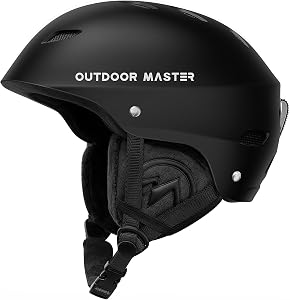
The most-reviewed ski helmet on Amazon and the one most first-time buyers end up in. Nine adjustable vents is a real count rather than a marketing one, and the shape is neutral enough to suit most heads, which is why it accumulates ratings faster than anything else here. No MIPS at this price. If you want one recommendation and no research, take this.

The cheapest genuine MIPS helmet worth owning, and the pick that makes the strongest argument on this page. You get the slip layer that addresses rotational force for roughly what an uncertified novelty helmet costs, on top of the same certified shell as the Kelvin. It is a little heavier and the liner is plainer than the premium pair. If your budget stops anywhere on this page, stop here.
Performance Grade
Goggle integration and shells built for repeat knocks
Bought for one reason: if you ski in Smith goggles, this is the helmet they were designed against, and AirEvac pulls warm air out from behind the goggle rather than letting it fog. In-mold construction makes it noticeably lighter on a long day than the ABS shells above. No MIPS in this model, which is the trade against the ELK - you are paying for fit and venting instead.

A hard-shell park helmet built to take repeated small knocks - rails, boxes, and the low-consequence falls that come with learning tricks - without cosmetically falling apart the way in-mold shells do. Heavier than the Smith and less vented, which is the honest trade. If your skiing happens mostly between features rather than on open groomers, this is the shell that lasts.
How to Choose a Ski Helmet
Check the Certification, Then Stop Worrying About Impact
In the US, snowsport helmets are tested to ASTM F2040; in Europe the equivalent is CE EN 1077. A helmet carrying one of those has passed a standardised impact test, and a $46 certified helmet has passed the same test as a $200 one. Price buys comfort, weight, venting and features. It does not buy a meaningfully higher pass mark. What should worry you is an uncertified novelty helmet, or a second-hand one with an unknown history — foam liners are single-impact by design and a helmet that has taken a real hit is finished even if it looks fine.
MIPS Addresses a Different Kind of Crash
Standard helmet testing measures straight-line impact. Most real falls are angled, and an angled impact twists the head as well as stopping it — rotational force is strongly associated with concussion. MIPS is a low-friction layer inside the helmet that lets the shell rotate a few millimetres around your skull, shedding some of that twist. It typically adds $10–30. The evidence is good enough that it is worth having if the budget stretches, and not so overwhelming that a certified non-MIPS helmet is a bad choice.
The Fit Test Takes Ten Seconds and Most People Skip It
Put the helmet on without fastening the strap and shake your head firmly side to side and up and down. It should move your scalp rather than slide independently, and it should not rock forward onto your eyebrows. Then tighten the rear dial until it is snug, not clamped. A helmet that slides when unbuckled is too big, and a too-big helmet rotates out of position in exactly the impact you bought it for. Between two sizes, take the smaller one and let the pads compress.
Buy the Helmet and the Goggles as One Decision
The brim of the helmet and the top of the goggle need to meet without a stripe of bare forehead between them, and the goggle strap needs to sit in the helmet's rear clip rather than riding up. Brands fit their own goggles best, which is most of the argument for the Smith at the top of this page if you already own Smith goggles. If you are buying both at once, order together and try them together before the tags come off.
Vents Matter More Than Beginners Expect
Skiing is an on-and-off activity: you are freezing on the lift and sweating four turns into the run. A helmet with closable vents lets you dump heat on the way down and shut it on the way up, and that single control is the difference between a comfortable day and a soaked liner. Removable, washable ear pads are the other quietly useful feature, because a helmet liner after a season smells exactly as you would expect.
Frequently Asked Questions
Is a cheap ski helmet as safe as an expensive one?
Against straight-line impact, essentially yes, provided it carries ASTM F2040 or CE EN 1077. Both have passed the same standardised test. The expensive helmet gives you lighter weight, better and adjustable ventilation, a more refined fit system, better goggle integration and often MIPS. Those are real benefits - a helmet you find comfortable is one you actually wear - but they are comfort and rotational-injury benefits, not a higher impact rating.
Is MIPS worth the extra money?
If it is within budget, yes. MIPS targets rotational force, which standard impact testing does not measure and which is strongly linked to concussion in the angled falls that make up most ski crashes. It usually costs $10 to $30 more. That said, a well-fitting certified helmet without MIPS beats a badly fitting one with it, so fit comes first.
When should I replace my ski helmet?
Immediately after any real impact, even if there is no visible damage - the EPS foam works by crushing, and once crushed it cannot absorb a second hit. Otherwise most manufacturers suggest around five years, because the foam and the shell bonding degrade with UV, sweat and temperature cycling. Never buy a used helmet: you cannot see a crushed liner and you have no way to know its history.
How should a ski helmet fit?
Snug all round with no pressure points, and it should move your scalp rather than slide when you shake your head with the strap undone. It should not rock forward over your eyebrows or tip back off your forehead. Measure the circumference of your head just above the ears and compare against the specific brand's chart - sizing varies noticeably between makers. If you are between sizes, choose the smaller one.
Can I wear a beanie under my ski helmet?
A thin one, at most. Anything thick changes the fit the helmet was sized for and lets it move in an impact, which defeats the point. Modern helmets have insulated, removable liners and closable vents that handle cold better than a hat does. If you are cold with the vents shut, the helmet is probably too large rather than underinsulated.