Every ski goggle listing quotes a VLT percentage, almost none of them explain it, and it is the only specification on the box that changes how your day goes. VLT stands for visible light transmission: the percentage of available light the lens lets through to your eye.
A 10% lens passes a tenth of the light. A 70% lens passes most of it. Low numbers are dark lenses for bright days; high numbers are near-clear lenses for storms, fog and night skiing. Buying the wrong one is the difference between reading the snow and skiing blind down a white sheet.
The VLT Bands, and What They Are For
- 5–20% - bright sun. Spring bluebird days, high-altitude glare, snow reflecting at you from every direction. Anything higher than this and you will squint all day.
- 20–40% - mixed and partly cloudy. The all-rounder band. Passable in sun, survivable in cloud. If you can only own one lens, own one from here.
- 40–60% - overcast and light snow. Where most European winter days actually sit. Preserves contrast when the sky goes grey.
- 60–90% - flat light, fog, heavy snow, night. Nearly clear. Feels like wearing nothing, which is exactly right when there is no light to spare.
Flat Light Is the Problem Dark Lenses Cannot Solve
"Flat light" is what happens when cloud diffuses the sunlight so completely that shadows disappear. Without shadows there is no way to see where the snow rises and falls, so a mogul, a lip and a flat patch all look identical. Your brain has nothing to work with, and you ski tentatively and badly without quite knowing why.
A dark lens makes this dramatically worse, because it removes light from a situation that already has too little of it. This is the specific scenario where people who bought the cool-looking mirrored goggle discover they cannot see, and it accounts for most of the disappointment in this category.
Why Rose, Amber and Yellow Lenses Exist
Tint colour does something different from tint darkness. Rose, amber and yellow lenses filter out blue light, which is the wavelength that scatters most in cloud and fog and turns the view into a flat haze. Cutting it back increases the apparent contrast between surfaces, so edges and bumps reappear.
This is why a yellow lens feels like it brightens a grey day even though it is not adding any light. Grey and smoke lenses do the opposite - they cut all wavelengths evenly, preserving natural colour, which is what you want in bright sun. As a rough rule: warm tints for bad light, neutral tints for good light.
Contrast Lenses Are the One Premium Feature That Earns It
Lenses marketed as contrast-enhancing - Smith's ChromaPop is the best known - take the filtering idea further, selectively removing the narrow bands of wavelength where the eye's colour receptors overlap and confuse each other. The effect in flat light is real and immediate: bumps, ice patches and the edges of shadows separate out instead of merging into white.
This is not marketing in the way that most goggle features are. Whether it justifies the price depends entirely on how often you ski in bad light. If you ski a week a year in reliable sunshine, it is a luxury; if you ski grey maritime winters, it is the upgrade that changes how you ski.
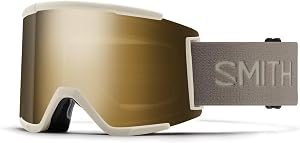
Smith Squad ChromaPop
The pair where you can see the difference rather than read about it. ChromaPop filters the specific wavelengths that blur together when the light goes flat, so terrain that had disappeared into white comes back as shapes you can actually ski. It ships with a second low-light lens, which quietly closes a good part of the price gap against the tier below. If you ski a lot of grey days, this is the one worth saving for.
Check Price on Amazon All goggle picksOne Lens or Two?
Light on a mountain changes within a single run, and no single lens covers a bluebird morning and a whiteout afternoon. The practical answer is a frame that takes interchangeable lenses, because a second lens costs a fraction of a second pair of goggles.
The mechanism matters more than people expect. Clip systems require bending the frame, which is awkward in gloves and cold hands, so the lens stays in the bag and never gets fitted. Magnetic systems snap out and in, and people actually use them. If you ski more than a handful of days a year, a magnetic frame is the best value in this whole category.

ZIONOR X4 Magnetic Lens
Magnetic lens changes at roughly half what the named brands charge for the same convenience, and the mechanism is the entire point. The lens pops off and snaps back without flexing the frame, which is why you will actually swap it on a chairlift rather than promising yourself you will do it tonight. Optics sit a clear step behind the Smith above, but it works cold and gloved, which the clip systems do not.
Check Price on Amazon All goggle picksVLT is the percentage of light a lens passes. Buy 5 to 20 percent for bright sun, 40 to 80 percent for flat light and storms, and 20 to 40 percent if you can only own one. Warm tints - rose, amber, yellow - increase contrast in bad light; grey and smoke preserve colour in good light. If you ski more than a few days a year, buy a magnetic interchangeable frame and a second low-light lens before you buy anything more expensive.
Looking After the Lens
One rule, and it is absolute: never wipe the inside of the lens. The anti-fog layer is a microscopically soft coating, and a single wipe with a cold wet glove removes it permanently. After that the goggle fogs whatever you do, and no amount of drying brings it back.
Shake water off instead, leave them open to air dry rather than zipped in a pocket, and store them in the soft bag they came with rather than loose in a boot bag next to a buckle. Goggles are a consumable if you treat them badly and last many seasons if you do not.
Frequently Asked Questions
What VLT should I buy for ski goggles?
For bright sun, 5 to 20 percent. For mixed or partly cloudy days, 20 to 40 percent. For overcast, 40 to 60 percent. For flat light, fog, heavy snow or night skiing, 60 to 90 percent. If you can only own one lens, choose something in the 20 to 40 percent band - it is dark enough for a sunny groomer and light enough to still read the snow when cloud arrives.
What is flat light and why can't I see in it?
Flat light is when cloud diffuses sunlight so evenly that shadows disappear. Without shadows there is nothing to tell you where the snow rises and falls, so bumps, lips and flat patches all look identical and your brain has no depth information to work with. A dark lens makes it considerably worse by removing light from a situation that already lacks it.
Are yellow or rose ski goggle lenses better for cloudy days?
Yes. Warm tints like rose, amber and yellow filter out blue light, which is the wavelength that scatters most in cloud and fog and flattens the view into haze. Removing it increases apparent contrast so bumps and edges become visible again. The lens is not adding light - it is removing the part that was blurring the picture.
Is ChromaPop worth the money?
If you regularly ski in flat or variable light, yes - the effect is real rather than marketing. It filters narrow wavelength bands where your eye's colour receptors overlap, which separates terrain features that would otherwise merge into white. If you only ski a week a year in reliable sunshine, it is a luxury rather than a fix, and a mid-price interchangeable goggle would serve you better.
How do I stop the anti-fog coating wearing off my goggles?
Never wipe the inside of the lens. The anti-fog layer is an extremely soft coating and a single wipe with a wet glove takes it off permanently, after which the goggles fog no matter what you do. Shake water off, let them air dry open rather than zipped in a pocket, and store them in their soft bag rather than loose against buckles and zips.