A ski bag is the one piece of gear you buy for the airport rather than the mountain, and the decision is simpler than the product listings suggest. If you are flying, you want padding — baggage handlers are not gentle and an unpadded sleeve is protection against scratches, not against being dropped. If you are driving, an unpadded bag is lighter, cheaper and keeps wet skis off the upholstery, which is all it needs to do. The second decision is whether boots travel with the skis or separately, and the answer is almost always separately: a boot bag is carry-on sized, and boots are the one item you genuinely cannot rent a substitute for if the airline loses your luggage.
Last updated: September 2026
| Bag | Tier | Carries | Padding | Score |
|---|---|---|---|---|
| Athletico Combo | Budget | Skis + boots | Unpadded | 7.9 |
| RESVIN 65L | Budget | Boots + kit | Padded | 8.2 |
| KEMIMOTO Combo | Best Value | Skis + boots | Padded | 8.1 |
| Athletico Mogul | Best Value | One pair of skis | Fully padded | 8.4 |
| Athletico Boot Bag | Premium | Boots + kit | Padded | 8.6 |
| Unigear Boot Backpack | Premium | Boots + kit | Padded | 8.9 |
Gets It There
For road trips and the occasional short-haul flight
Both bags you need in one purchase at the lowest price on the page, which is the entire argument for it. Unpadded, so it belongs in a car boot rather than an aircraft hold - it keeps edges off the upholstery and melting snow off everything else, and does nothing more ambitious than that. Fits skis to 200cm. The sensible first buy for someone who drives to the hill.

A boot bag rather than a ski bag, and a well-built one - 1680D nylon is genuinely tough fabric and the waterproofing holds up in a snowy car park. Sixty-five litres swallows boots, helmet, goggles and a jacket, which makes it a carry-on that takes your whole soft kit. Heavy when full, but backpack straps mean you can actually walk with it.
The Step-Up
Real padding for skis that go in an aircraft hold
The padded version of the combo idea: both bags, both with real padding, and a 200cm ski bag that also swallows a snowboard. It is the pick if you fly and want one purchase to cover it, with the caveat from the guide above - check whether your airline counts the two bags as one item or two, because that changes the economics entirely.

The first pick here you can genuinely put on a plane. Padding runs all the way round rather than along the base only, which is the difference between a scratched topsheet and a cracked one. It takes one pair, which is also why it protects them well - there is less to cushion. If you fly with skis at all, this is the entry point and the value pick on the page.
Performance Grade
Vented compartments and backpack carries that survive seasons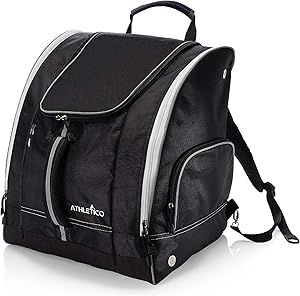
The same idea as the Unigear with a slightly more structured build and a dedicated goggle pocket, which stops the one item on your kit list that scratches from riding loose against a boot buckle. Vented boot sections, separate helmet space, backpack straps. Choose between the two on capacity: this is the tidier bag, the Unigear is the bigger one.
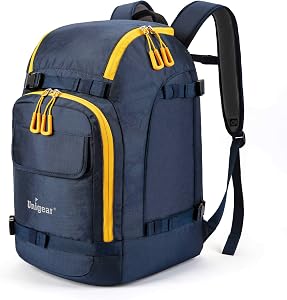
The best-reviewed bag here and the one that solves the smell problem properly. Each boot gets its own vented compartment so damp liners breathe in transit instead of stewing, and the centre section holds a helmet and goggles dry and separate. Carries as a proper backpack, which matters walking from a resort car park. If you only buy one bag on this page, this is the one that earns it.
How to Choose a Ski Bag
Padded for Flying, Unpadded for Driving
This is the whole decision for the ski bag itself. An unpadded bag is a fabric sleeve: it keeps edges off your car seats, keeps melting snow off everything else, and costs very little. Put the same bag in an aircraft hold and it is protecting a $600 pair of skis with one layer of nylon. A fully padded bag — foam all the way round, not just a strip along the base — is what actually survives being thrown onto a conveyor. If you fly with skis even once a year, buy padded and be done.
Boots Should Travel Separately, and Usually as Carry-On
Ski boots are the one item on the mountain you cannot sensibly replace at short notice. Rental skis are fine; rental boots in your size on the morning your luggage did not arrive are a lottery. Most boot bags are sized to pass as cabin baggage, which is why the smart pattern is skis and poles in the hold, boots on your back. It also keeps the ski bag under the airline's weight limit, which is usually where the extra charges start.
Buy for Your Ski Length Plus Ten Centimetres
Ski bags are sold by the maximum length they take, and the number is the internal length — a 185cm bag genuinely will not close over 190cm skis. Measure your skis rather than trusting your memory of what you bought, and allow a little room for bindings, which add height rather than length but stop a tight bag zipping. A bag rated to 200cm covers almost every adult ski; the shorter bags are cheaper and fine if you know your length.
A Boot Bag Is Really a Kit Bag
The better boot bags are backpacks with separate vented compartments for each boot and a dry central section for a helmet, goggles and gloves. The venting is not a gimmick: boot liners hold a surprising amount of sweat, and a sealed bag turns that into mildew by the end of a trip. Backpack straps matter more than they sound — a loaded boot bag is heavy, and resort car parks are a long walk.
Check the Airline Before You Buy the Bag
Ski carriage rules vary more than any other sports equipment. Some carriers take a ski bag plus a boot bag as one standard checked item; some charge a flat sports-equipment fee; some count each separately and charge twice. The bag you should buy depends on which of those you are flying, and a combo bag that puts skis and boots together is either a saving or a weight-limit problem depending entirely on the airline. Look it up before you spend.
Frequently Asked Questions
Do I need a padded ski bag to fly with skis?
If you value the skis, yes. An unpadded bag protects against scratches and keeps water off other luggage, but it offers essentially nothing against the impacts skis take in an aircraft hold. Fully padded means foam all the way around rather than a reinforcing strip along the base. For driving to the hill, unpadded is genuinely all you need.
Should ski boots go in the ski bag or a separate boot bag?
Separate, and ideally as carry-on. Boots are the one piece of kit you cannot practically replace at short notice - rental skis are fine, rental boots in your exact size on short notice are not. Carrying them on also keeps the checked ski bag under the airline weight limit, which is where extra charges usually begin.
What size ski bag do I need?
Your ski length plus about 10cm. Bag sizes quote the internal length, so a 185cm bag will not close over 190cm skis. Measure rather than guessing, and allow for bindings, which add bulk that can stop a tight bag zipping even when the length is right. A 200cm bag fits almost any adult ski if you are unsure.
Can I put two pairs of skis in one ski bag?
Only in a bag specifically sold as a double, and even then check the weight limit before you do it. Two pairs plus bindings in one bag climbs past most airlines' 23kg allowance quickly, and the overweight charge often exceeds what a second bag would have cost. Single-ski bags are also better padded per ski, since there is less to protect.
How do I stop my ski boots smelling after a trip?
Pull the liners out at the end of each day and let them dry in the room rather than sealed in the bag, and use a boot bag with vented boot compartments so anything still damp can breathe in transit. The mildew smell people associate with ski boots is almost entirely the result of wet liners spending a week zipped inside an airtight bag.