A badminton set is the right purchase in exactly one situation: when you need more than one racket at once and nobody involved has a strong opinion about balance points yet. Buying two matched rackets in a box costs less than buying them separately, the covers and shuttles are thrown in, and everyone gets the same equipment so nobody blames the racket. The catch is that sets are where manufacturers hide their worst frames, so the useful question is not "which set is cheapest" but "which set contains rackets I would have bought on their own". These six do.
Last updated: September 2026
| Set | Tier | Players | Frame | Score |
|---|---|---|---|---|
| HIRALIY Racket Set | Budget | 2 | Aluminium | 8.0 |
| Yonex GR 303 Combo | Budget | 2 | Aluminium | 8.3 |
| Yonex ZR 100 Light Set | Best Value | 2 | Aluminium blend | 8.4 |
| Senston 90g Set of 4 | Best Value | 4 | Carbon fibre | 8.6 |
| Li-Ning XP Series Set of 2 | Premium | 2 | Blend | 8.5 |
| Senston N80 2-Player | Premium | 2 | Full carbon | 8.8 |
Garden Sets
Everything needed to start playing this afternoon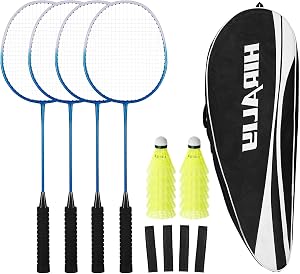
The bare-bones version of what a set is for: two rackets, some shuttles and a bag, at a price where nobody is upset if one gets left at the park. The frames are aluminium and feel it, but they are strung reasonably and the grips are usable straight out of the box. This is a garden purchase and it is honest about being one.

Two of the GR 303 rackets from our <a href="rackets.html">rackets</a> page in one box, for not much more than the price of one. That matters because it means the frames in this set are ones we would recommend individually — isometric heads, shafts that actually flex — rather than the anonymous aluminium that fills most sets. The obvious pick if two people are starting together.
The Step-Up
Sets built around rackets worth owning separately
Lighter than the GR 303 pair, which is the reason to choose it: in a mixed-age household the limiting factor is usually how heavy the racket feels to the smallest person holding it, not how much power it can generate. The blend frame gives away some crispness to get there. Sensible if the set is going to be shared by adults and children.

Four carbon-fibre rackets is an unusual thing to find at this price — most four-racket sets are aluminium, and the difference in how a shot feels is immediate. It is the set to buy if the point is doubles in a garden and you would rather all four people had something decent than two people had something good. The bundled shuttles are, as always, the weak link.
Carbon Pairs
Two proper rackets, sold together to save money
Li-Ning is the other name that means something in badminton, and this pair is their answer to the same question. The blend frame sits between the aluminium sets and the full-carbon ones in both feel and price — noticeably crisper than the budget tier, not quite as lively as the N80 pair. Worth it if you would rather have the brand behind the racket than the last few grams.

A pair of the N80 from the rackets page, and the best straight value in this category. Two genuine one-piece carbon frames for roughly the price of one mid-range branded racket, both light enough to swing quickly through a long rally. Buy this if two people in the house are past the point of borrowing whatever is in the shed.
How to Choose a Badminton Set
Count the Rackets Before You Compare the Prices
The single biggest source of confusion in this category is that "badminton set" means two entirely different products: a pair of rackets in a bag, and a four-racket-plus-net garden kit. A $40 two-racket set and a $50 four-racket-plus-net set are not competing with each other, and the second one is not better value — it is spending the same money across twice as many frames plus a net, which is exactly where the quality goes. Decide how many people are playing first.
Aluminium and Steel Sets Are Fine, Within Limits
Most sets under $45 use an aluminium head on a steel shaft. That construction is heavier than graphite and flexes in the wrong place, so shots feel mushy and the racket arrives late — but it is also nearly indestructible, which is genuinely the right property for equipment that lives in a garage and gets lent to guests. Buy aluminium if the set is for occasional social play. Buy graphite if anyone using it intends to improve.
Carbon Two-Player Sets Are the Hidden Value Here
The interesting products in this category are the pairs of full-carbon rackets sold at roughly the price of one mid-range racket plus twenty dollars. If two people in a household both play properly, this is the cheapest way to equip both of them with frames that will not need replacing in a year. Check the weight class is stated — a set that will not tell you whether it is 4U or 5U is usually hiding an unpleasant answer.
What Is Actually in the Box
Sets vary wildly in what comes with them, and the shuttles included are almost always the cheapest hard nylon available. Treat any bundled shuttles as a temporary loan and budget for a proper tube separately — our shuttlecocks page covers the difference. The carry bag included with most sets is worth having; the grips are not, and one cheap overgrip transforms how a set racket feels in the hand.
When Not to Buy a Set
If you are buying for one person who has already played a few times and knows they enjoy it, skip this page entirely. A single $35 to $40 racket chosen for balance and flex will be better than either racket in a $45 pair, and you will not be carrying a spare you never use. Sets solve the problem of equipping a group, not the problem of equipping a player.
Frequently Asked Questions
Is a badminton set better value than buying rackets separately?
For two or more players, usually yes — a matched pair typically costs 20 to 30 percent less than the same two rackets bought individually, and the covers and bag are included. For one player it is worse value, because half the money goes on a racket that sits in a cupboard. The exception is if you want a spare in your bag for a broken string mid-session, which is a real reason club players own pairs.
Do badminton sets come with a net?
Some do and some do not, and the listings are not always clear about it. Two-player and four-player racket sets normally include rackets, shuttles and a bag but no net. Full garden kits include a net and posts but usually spend so little on the rackets that they are barely playable. If you want both, buying a good racket set and a separate net from our <a href="nets.html">nets and posts</a> page gives a much better result for similar money.
Are the shuttlecocks included with a set any good?
Almost never. Bundled shuttles are the cheapest hard nylon on the market, chosen to make the box look full rather than to fly properly. They will work for a first afternoon. Budget ten to fifteen dollars for a tube of decent nylon shuttles alongside any set — it makes more difference to how the game feels than anything else you could spend the same money on.
Can adults use a four-player family badminton set?
Yes, but the rackets are usually standard adult length rather than junior, so children under about eight will find them long and heavy rather than the other way round. If you are buying for a mixed-age group, look for a set that states a lighter weight class, and accept that the same rackets will feel slightly underpowered to any adult who has played properly before.
What should I upgrade first on a cheap badminton set?
The shuttles, then the grip, then the rackets — in that order. Proper nylon shuttles cost about ten dollars and change how the game plays immediately. A two-dollar overgrip fixes the slippery plastic handle every cheap set ships with. Only after both of those is a racket upgrade the thing holding you back, and by then you will know what balance you want.