Shuttlecocks are the one part of badminton that is genuinely consumable, and the choice comes down to a single fork: nylon or feather. Nylon shuttles are made of one moulded plastic skirt, survive being hit by beginners and being played outdoors, and last months. Feather shuttles are sixteen goose or duck feathers glued into a cork base, fly with a flight and a braking curve that nylon cannot reproduce, and can be destroyed in a single rally. Neither is better; they are for different situations, and buying the wrong one is the most common badminton purchase mistake there is.
Last updated: September 2026
| Shuttle | Tier | Material | Best For | Score |
|---|---|---|---|---|
| HIRALIY Nylon | Budget | Nylon | Backyard | 7.9 |
| EAGLES Nylon Birdies | Budget | Nylon | Outdoor | 8.1 |
| Yonex Mavis 200i | Best Value | Nylon | Training | 8.5 |
| Yonex Mavis 350 | Best Value | Nylon | Club | 8.7 |
| Goose Feather 12-Pack | Premium | Goose feather | Match play | 8.6 |
| Yonex Aeroclear 30 | Premium | Goose feather | Match play | 9.0 |
Backyard Nylon
Cheap, tough, and fine for a garden or a driveway
The cheapest thing on this page that is still a real shuttlecock rather than a toy. The skirt is hard nylon, so the flight is flat and the feel off the strings is blunt, but they survive concrete, grass and being trodden on — which is what a garden shuttle is actually asked to do. Buy them by the dozen and stop worrying about where they land.

A step up in build from the cheapest nylon without a step up in price that matters. The base is heavier, which does two useful things outdoors: it fights a light breeze, and it stops the shuttle from stalling when a beginner hits it softly. Still nowhere near feather flight, but for a driveway or a park these will outlast a whole summer of casual games.
Club Nylon
Consistent flight that lasts a whole training session
The cheapest Yonex shuttle worth owning, and the point at which nylon stops being a compromise and starts being a deliberate choice. The skirt is softer than the budget shuttles above, so it deforms on impact and brakes a little rather than sailing — noticeably closer to feather behaviour at a fraction of the running cost. This is the shuttle to train on.

The default training shuttle in club halls worldwide, and the one you will most often be handed if you turn up somewhere new. Flight is consistent tube to tube, which matters more than it sounds — practising drops against shuttles that all brake at slightly different points teaches you nothing. Expensive for nylon, cheap for how long a tube lasts.
Feather
The flight the sport is actually designed around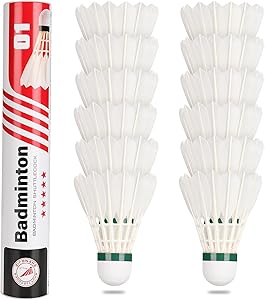
Feather flight without the tournament-brand price, and for most club players that trade is the right one. The braking curve is the real thing — drop shots die over the tape instead of drifting to the service line — and the cork base gives you the crisp report off the strings that nylon never manages. Expect to use them up: that is what feather is.

What you buy when the shuttle itself has to stop being a variable. Yonex grade and speed-match the feathers within a tube, so twelve shuttles fly the same way — which is the entire point at a level where you are aiming for the tramline rather than the court. It is the most expensive item in this category by a distance and it is aimed squarely at people playing real matches.
How to Choose Badminton Shuttlecocks
Nylon vs Feather Is a Question of Where You Play
A feather shuttle decelerates hard after the initial hit, which is what makes badminton's drop shots and net play work as a game. A nylon shuttle carries further and flattens out. If you play indoors at a club and care about the actual sport, feather is not a luxury — it is the flight the tactics were built around. If you play in a garden, on grass, or with children who miss more than they hit, feather shuttles will be destroyed in an afternoon and nylon is the only sane answer.
Speed Ratings Are About Air Temperature, Not About You
Shuttles are sold as slow, medium and fast, and it is not a difficulty setting. Air density changes how far a shuttle carries, so cold halls at altitude need a faster shuttle and hot humid rooms at sea level need a slower one. A shuttle is correctly speeded when a full-power underarm clear from the back tramline lands between the back doubles service line and the baseline. Most indoor play in a heated hall wants medium or slow; buy medium if you are guessing.
Feather Shuttles Are a Running Cost, Not a Purchase
Be honest about this before you buy them. A tube of twelve feather shuttles is used up by four club players in one or two evenings of real play — feathers split, the skirt goes soft, and the flight changes long before the shuttle physically falls apart. That works out at a real per-hour cost. Clubs handle it by pooling; individuals handle it by training on nylon and saving feather for matches.
Nylon Skirts Come in Two Hardnesses
Cheaper nylon shuttles use a harder plastic that survives abuse but feels harsh off the strings and flies flat. Better ones — the Yonex Mavis range is the obvious example — use a softer, more flexible skirt that deforms slightly on impact and recovers, which gets you closer to feather's braking behaviour. It is the single upgrade most recreational players notice immediately, and it costs a few dollars a tube.
Storage Actually Matters for Feather
Feathers dry out. A tube left in a hot car or a dry heated room for a month produces shuttles that shatter on the first clean smash, which people usually blame on the manufacturer. The standard fix is to keep the tube sealed and, before a session, lightly steam or humidify the feathers — a damp cloth in the tube for a few hours is enough. Nylon needs none of this, which is another reason it is the right training shuttle.
Frequently Asked Questions
Are feather shuttlecocks worth it for a beginner?
Not for practice, yes for the experience. A beginner mis-hits often, and every frame hit costs feathers, so a tube that should last two sessions will last one. The sensible pattern is to train on good nylon and buy a single tube of feather so you know what the real thing flies like — because once you have felt a feather drop shot brake over the net, you will understand what the sport is actually about.
What speed shuttlecock should I buy?
Medium, unless you know your hall is unusually hot or cold. Speed is a correction for air density, not skill: cold or high-altitude air is thin and needs a faster shuttle to carry the same distance, hot humid air needs a slower one. Test it with a full underarm clear from the back tramline — the shuttle should land between the back doubles service line and the baseline.
How long do badminton shuttlecocks last?
A nylon shuttle survives weeks to months of recreational play and usually dies from a cracked skirt or a squashed cork rather than from wear. A feather shuttle lasts anywhere from a few rallies to a couple of games — club players typically budget one shuttle per game at a decent standard. If your feather shuttles are dying instantly, they are probably too dry rather than defective.
Can I use feather shuttlecocks outdoors?
You can, but you will not enjoy it. Feather shuttles are extremely light and any breeze at all makes rallies impossible, quite apart from grass and concrete destroying the feathers. Outdoor badminton is a nylon-only sport in practice, and there are heavier outdoor-specific nylon shuttles designed to fight the wind if you play in the garden regularly.
What is the difference between goose and duck feather shuttles?
Goose feathers are stronger and straighter, so goose shuttles are more durable and fly more consistently — they are what tournament-grade shuttles use. Duck feather shuttles are cheaper and perfectly usable for club training, but they break sooner and vary more from shuttle to shuttle within a tube. If a feather shuttle is unusually cheap, it is duck.